
Dating App Fatigue Is Real — Here's What's Replacing It
78% of singles are burned out on dating apps. Discover why swipe fatigue is pushing people toward in-person, venue-based dating — and what comes next.
2/23/20266 min read
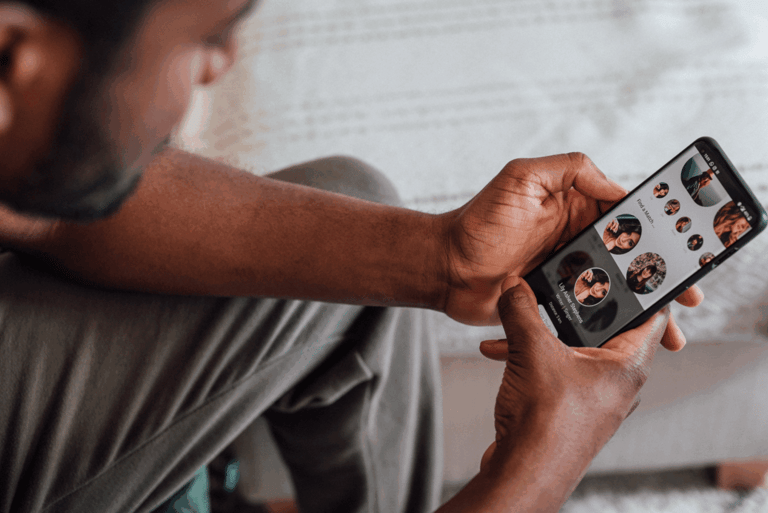
You downloaded the app. You uploaded your best photos. You wrote a clever bio, swiped until your thumb hurt, matched with a few people, sent some witty openers — and then… nothing. Ghosted. Again. Or worse, you had a week of texting that fizzled before it ever became a real date.
If this cycle sounds painfully familiar, you're not alone. Dating app fatigue has gone from a quiet frustration to a full-blown cultural movement — and in 2026, singles everywhere are finally doing something about it.
Dating app fatigue — sometimes called swipe fatigue or dating app burnout — is the emotional and mental exhaustion that comes from the repetitive cycle of swiping, matching, messaging, and getting nowhere. It's not just about one bad experience. It's the accumulation of hundreds of them: the low-effort conversations, the ghosting, the hours spent crafting messages that never get a reply, and the slow realization that the app might be designed to keep you scrolling rather than help you find someone.
According to a Forbes Health survey, 78% of dating app users report feeling fatigued — sometimes, often, or always. Among Gen Z, that number climbs to 79%. And it's not just a feeling: between May 2023 and May 2024, Tinder lost nearly 594,000 users, Bumble shed 368,000, and Hinge dropped by 131,000.
The numbers don't lie. People aren't just complaining about dating apps — they're leaving them.
The reasons behind dating app burnout go deeper than a few bad dates. Here's what's actually driving people away.
2. The Illusion of Infinite Choice
Having access to thousands of profiles sounds like a good thing — until it isn't. Psychologists call it the paradox of choice: when you have too many options, making any decision becomes harder. You start second-guessing every match, wondering if someone better is just one more swipe away.
Research shows that the average user spends roughly three seconds on a profile before swiping left and just under seven seconds on profiles they like. That's not enough time to evaluate a person — it's barely enough time to register their face. This kind of rapid-fire decision-making leads to shallow judgments, missed connections, and eventually, burnout.
1. The Endless Messaging Problem
The biggest frustration most singles share isn't matching — it's what happens after the match. You spend days, sometimes weeks, texting someone before you ever meet in person. And more often than not, that conversation dies somewhere between "what do you do?" and "we should hang out sometime."
A recent Hinge study found that although 84% of Gen Z users say they deeply desire connection, they're 36% more hesitant than Millennials to initiate meaningful conversations. Nearly half of women wait for the other person to make the first move toward depth, while a similar percentage of men hold back out of fear of coming on too strong. Both sides want the same thing — a real conversation — but neither wants to risk going first.
The result? An endless loop of surface-level texting that never converts into an actual date.
3. The Business Model Problem
Here's an uncomfortable truth: traditional dating apps make money when you stay single. Their revenue comes from subscriptions, premium features, and in-app purchases — all of which depend on you continuing to use the app. Every successful relationship is, quite literally, a lost customer.
When the app's success is measured by engagement time rather than relationships formed, the incentives are fundamentally misaligned with what users actually want.
What Is Dating App Fatigue?
What's Replacing Traditional Dating Apps?
The backlash against swipe culture isn't just talk. Singles are actively seeking alternatives — and the trends emerging in 2026 tell a clear story about what people actually want.
3.Personality Over Profile Pictures
There's a growing recognition that photos and prompts on a screen can only tell you so much about a person. A major dating trend for 2026 is what Plenty of Fish has called "the nerd normal" — the idea that intelligence, depth, and genuine passion have become the most attractive qualities, surpassing traditional looks-first culture.
A Dating.com report found that 71% of respondents now say that "nerds are sexy," signaling that daters are increasingly interested in who someone is rather than what they look like in their best-angled selfie. This shift naturally favors in-person interaction, where personality, humor, and presence are on full display — things that simply can't be captured in a dating profile.
1. The Return to In-Person Connection
Perhaps the most significant shift in dating culture right now is the overwhelming preference for meeting people face to face. A study by the Kinsey Institute found that over 90% of young people aged 18 to 27 chose at least one offline option — parties, bookstores, clubs, classes, parks — over online dating when asked where they'd prefer to meet a partner.
This isn't a nostalgic fantasy. Live event participation has surged by 49% according to Eventbrite data, with singles flocking to running clubs, pottery classes, speed-dating nights, and social gatherings specifically designed to bring people together in real life. The "meet-cute" — that spontaneous, organic moment of connection — has gone viral on TikTok, and Gen Z is actively trying to make it happen rather than waiting for an algorithm to do the work.
The Future of Dating App Already Here
Why Are So Many People Tired of Dating Apps?
2. Intentional Dating One Casual Swiping
The era of mindless swiping is giving way to something more deliberate. Singles in 2026 are being upfront about relationship goals, values, and expectations from the start. They're choosing quality over quantity, fewer but more meaningful interactions over an endless stream of superficial matches.
This trend — sometimes called "clear-coding" — reflects a generation that's tired of guessing games. Rather than spending weeks in a texting limbo wondering what the other person wants, people are looking for dating experiences that get to the point: do we have chemistry, or don't we?
4.Venue-Based and Activity-Based Dating
One of the most practical alternatives gaining traction is the concept of meeting at a specific place rather than through a chat window. Instead of exchanging messages for days before maybe agreeing to meet, singles are gravitating toward formats that skip the texting altogether and go straight to a real-world encounter.
This could be a curated café, a wine bar, a cultural event, or any setting where two people can actually experience each other's company without the pressure of a formal "date" — or the exhaustion of a two-week messaging marathon that leads nowhere.
Apps like Heybie are built entirely around this idea: instead of matching and messaging, users are connected directly through venue-based meetups at carefully selected cafés and restaurants. There's no texting phase, no ghosting window, and no infinite scroll. Just two people who are both serious enough about meeting someone to actually show up.
How to Break Free from Dating App Burnout?
If you're feeling the weight of swipe fatigue, the answer isn't to try harder on the same platforms that are burning you out. It's to change the format entirely. Here are some practical steps.
1.Audit Your Screen Time
Before you blame yourself for being "bad at dating," look at how much time you're actually investing. Hours of swiping per week, dozens of conversations that go nowhere, emotional energy spent on people who ghost — it adds up. When you calculate the true cost, "free" dating apps start looking like the most expensive option of all.
2.Prioritize Face-to-Face Interaction
Whether it's through a venue-based dating app, a local event, or simply saying yes to more social opportunities, prioritize formats where you actually meet people. Chemistry is something you feel in person — it's nearly impossible to assess through text.
3.Set Boundaries With Technology
If you're going to use dating apps at all, use them as a supplement rather than your main strategy. Set time limits, take regular breaks, and resist the urge to endlessly scroll. Your mental health matters more than your match count.
4.Choose Platforms That Aligns With Your Goals
Not all dating apps are built the same. If you're looking for something real, choose a platform whose design encourages real interaction. Look for apps that minimize endless texting, promote in-person meetings, and align their business model with actually helping you find someone — not keeping you on the app.
Dating app fatigue isn't a phase — it's a turning point. After a decade of swiping, the dating industry is being forced to reckon with the fact that more matches and more messages don't equal better outcomes. What works is simpler and more human than any algorithm: two people, sitting across from each other, having a real conversation.
The shift toward intentional, in-person, venue-based dating isn't just a trend. It's a correction. And for the millions of singles who are tired of the swipe-and-ghost cycle, it's exactly what they've been waiting for.
Ready to skip the texting and meet someone in real life? Heybie connects you with curated venue-based meetups at handpicked cafés and restaurants — no endless messaging required. Download Heybie today and experience dating the way it should be.


Contact
Subscribe
info@heybie.com
© 2025. All rights reserved.
LEGAL POLICIES